
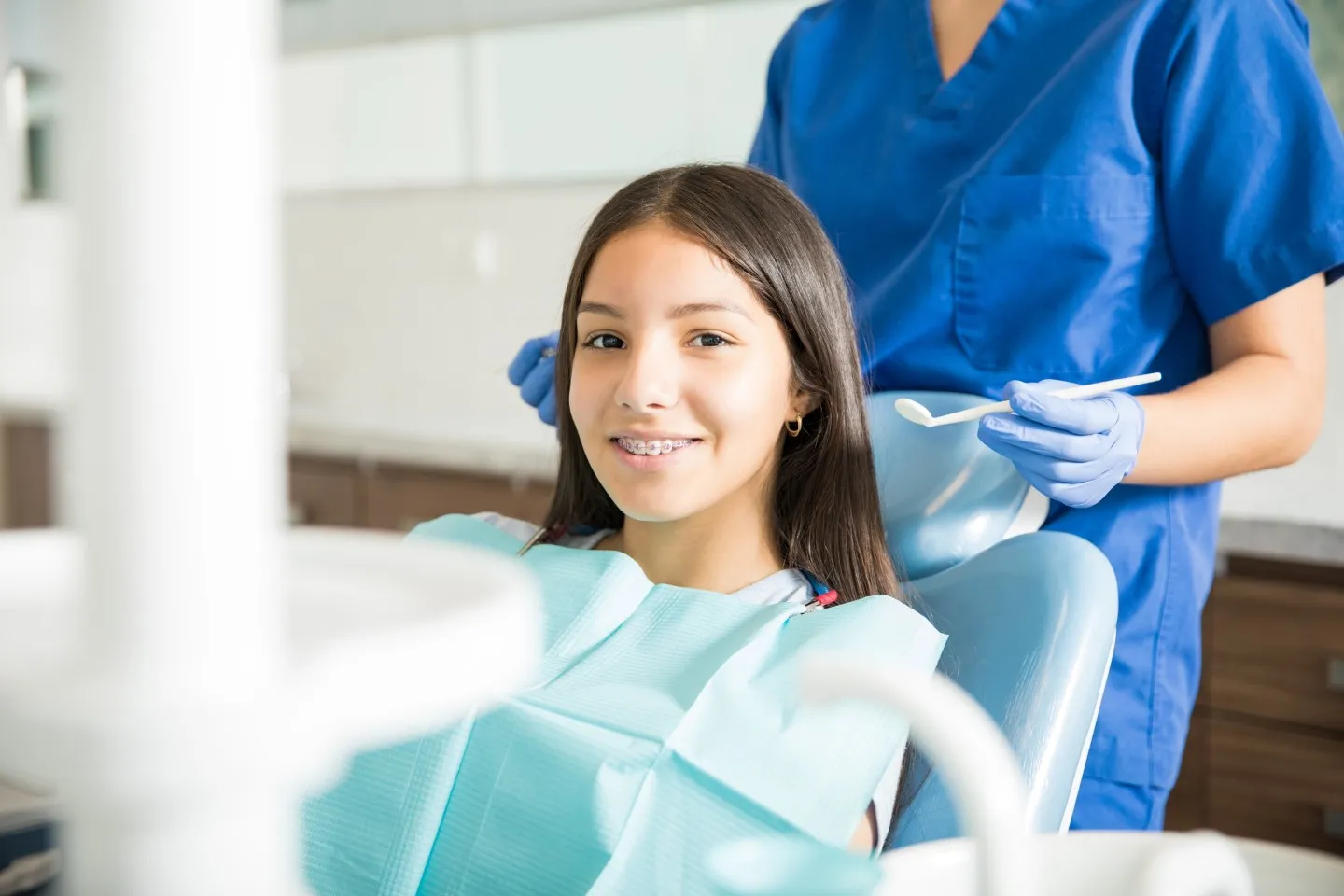
Your child's first orthodontic checkup should happen by age 7. At this age, enough permanent teeth have emerged for an orthodontic specialist to spot developing issues like crossbites, crowding, or jaw growth concerns. Early evaluation doesn't always mean early treatment, but it gives Dr. Miller the chance to monitor growth and step in at the right time if needed.
What Is a First Orthodontic Checkup?
A first orthodontic checkup is a screening visit where an orthodontic specialist evaluates how your child's teeth and jaw are developing. It's not about putting braces on a second-grader. It's about getting ahead of potential issues before they become bigger concerns. The American Association of Orthodontists recommends this timing because permanent molars typically erupt around age 6 or 7, giving the specialist enough information to evaluate bite patterns and jaw alignment with confidence.
Here's what reassures most parents: the majority of children leave their first visit with a simple "wait and monitor" plan. No braces. No appliances. Just peace of mind and a clear picture of what to expect. At Seacoast Braces Miller Ortho in Dover and Exeter, this visit is complimentary.
What Happens During Your Child's First Visit?
The first orthodontic checkup is designed to be comfortable for kids and informative for parents. Dr. Richard Miller, a board-certified orthodontic specialist, takes a thorough look at your child's teeth, jaw, and facial structure to understand how everything is developing together.
During the evaluation, you can expect:
- A thorough exam of teeth, jaw alignment, and facial balance
- Digital X-rays or 3D scans to see developing teeth still beneath the gums
- A conversation about habits like thumb sucking, mouth breathing, or tongue thrust
- A review of family dental history since orthodontic traits often run in families
- Assessment of bite alignment, crowding, and spacing patterns
- Personalized recommendations based on what Dr. Miller observes
After the exam, you'll have dedicated time to ask questions. Should we monitor and wait? Is early treatment needed? What would treatment look like down the road? You'll leave with clear answers and a plan that fits your child's specific situation.
Most kids find the visit quick and painless. There are no shots, no drilling, and nothing uncomfortable about the experience. It's simply a chance to gather information and set your child up for the healthiest smile possible. Families across the New Hampshire Seacoast appreciate how relaxed this first visit feels for younger children.
What Are the Benefits of Early Orthodontic Evaluation?
Getting your child evaluated by age 7 opens up options that may not be available later. While your child's jaw is still growing, an orthodontic specialist can guide development in ways that become much harder once growth is complete.
Early evaluation can:
- Identify bite issues early. Crossbites, overbites, and underbites are easier to address while bones are still malleable.
- Guide jaw development naturally. Appliances like palatal expanders can create space for crowded teeth as the jaw grows.
- Reduce the need for surgery. Some jaw discrepancies require surgical correction if not addressed during growth years.
- Catch habits before they cause damage. Thumb sucking and tongue thrust can leave a lasting mark if they continue too long.
- Shorten future treatment time. Early intervention often means less complex treatment during the teen years.
- Build confidence early. Knowing there's a plan in place helps both kids and parents feel more at ease.
According to the American Association of Orthodontists, early evaluation doesn't commit you to early treatment. It simply gives your orthodontic specialist the information needed to recommend the best timing for your child's unique situation.
Early Evaluation vs. Waiting Until the Teen Years
| Factor | Early Evaluation (Age 7) | Waiting (Age 12+) |
|---|---|---|
| Jaw Growth | Bones still flexible and responsive to guidance | Growth nearly complete, less flexibility |
| Treatment Options | Can guide growth with expanders and appliances | Primarily alignment correction |
| Complex Issues | Crossbites and severe crowding easier to address | More involved correction may be needed |
| Treatment Duration | Phase 1 now may reduce Phase 2 later | Single thorough phase |
| Best For | Jaw discrepancies, crowding, bite issues | Cosmetic alignment, mild spacing |
The right timing depends entirely on your child's specific needs. Some children benefit from Phase 1 treatment during elementary school, followed by a shorter Phase 2 in their teen years. Others do perfectly well waiting until all permanent teeth have erupted.
Dr. Miller, a board-certified orthodontic specialist, evaluates each child individually. If your child's concerns are primarily cosmetic and their bite is developing normally, waiting until adolescence makes sense. When there's a jaw growth concern or severe crowding, however, early intervention can make a real difference in long-term outcomes.
Think of it this way: you're not choosing between early treatment and later treatment. You're gathering the information you need to make the best decision at the right time for your child.
How Much Does a First Orthodontic Checkup Cost?
A first orthodontic checkup typically costs nothing. At Seacoast Braces Miller Ortho, with offices in Dover and Exeter, initial consultations are complimentary for every family. You can bring your child in for an evaluation without any financial obligation, paperwork hassle, or pressure to start treatment. This makes it easy to get real answers about your child's development.
If Dr. Miller recommends early treatment, costs vary based on the complexity of your child's needs and the type of appliance required. A simple space maintainer costs less than a palatal expander, and Phase 1 treatment is generally less extensive than full teen treatment.
Making treatment affordable:
- Flexible low monthly payment plans spread costs over many months, easing the impact on your family budget
- FSA and HSA funds can be applied to orthodontic care
- Many dental insurance plans include orthodontic benefits for children, often covering a meaningful portion of Phase 1 care
- Stress-free financing options make it easier to say yes to treatment
The first visit is about information, not commitment. You'll leave knowing exactly what your child needs and what it would cost, with no pressure to decide on the spot.
Signs Your Child Should See an Orthodontist Now
While age 7 is the general guideline, certain signs suggest your child should be evaluated sooner rather than later. Trust your instincts. If something seems off about your child's bite or jaw, it's worth getting a professional opinion. Many parents across the Seacoast region of New Hampshire reach out simply because they noticed something didn't look quite right.
Schedule an evaluation if you notice:
- Early or late loss of baby teeth. Both can affect how permanent teeth come in.
- Difficulty chewing or biting food. This often indicates a bite alignment issue.
- Mouth breathing or snoring. These habits can affect jaw development over time.
- Thumb sucking past age 5. Prolonged sucking can push teeth out of alignment.
- Crowded, misplaced, or blocked-out teeth. Visible crowding often signals more going on beneath the surface.
- Jaws that shift, click, or appear misaligned. Jaw concerns are best addressed during growth years.
You don't need a referral from your dentist to schedule an orthodontic evaluation. If you're concerned, call directly and get answers from someone who specializes in this area.
Frequently Asked Questions
Is age 7 too young for braces?
No, age 7 is not too young for an orthodontic evaluation, but most 7-year-olds won't need braces at their first visit. The evaluation is a screening to identify potential issues, not a treatment start. If early intervention is needed, it typically involves appliances like expanders rather than braces. The goal is to monitor growth and step in only when necessary.
Do I need a referral from my dentist?
No referral is necessary. You can schedule your child's first orthodontic checkup directly with Seacoast Braces Miller Ortho. Many parents choose to coordinate with their family dentist, but it's not required. If you have concerns about your child's bite or jaw development, you're welcome to call and schedule a free consult.
What if my child doesn't need treatment yet?
When Dr. Miller determines your child's teeth and jaw are developing normally, they'll join a growth monitoring program. This means periodic check-ins, typically every 6 to 12 months, to track development and catch any changes early. There's no charge for monitoring visits, and most children simply need observation until their permanent teeth are in.
How often should follow-up visits occur?
For children in the monitoring phase, visits typically occur every 6 to 12 months depending on their development. This allows Dr. Miller, a board-certified orthodontic specialist, to track changes and recommend treatment at the optimal time. Once active treatment begins, visits are usually scheduled every 4 to 8 weeks.
Will early treatment prevent braces later?
Early treatment can reduce the severity and duration of future treatment, but it doesn't always eliminate the need for Phase 2 braces during adolescence. Phase 1 focuses on guiding jaw growth and creating space. Phase 2 focuses on fine-tuning alignment once all permanent teeth have erupted. Some children need both phases; others need only one.
What is two-phase treatment?
Two-phase treatment involves early intervention during childhood, then full treatment during the teen years. Phase 1 typically addresses jaw growth, severe crowding, or bite issues. It happens while bones are still developing. After a resting period, Phase 2 begins. Phase 2 aligns all permanent teeth for a finished result. Not every child needs two phases. Dr. Miller will recommend the approach that makes the most sense for your child's situation.
Your child's smile is developing right now. Whether they need early treatment or simply monitoring, knowing what's ahead helps you plan with confidence. At Seacoast Braces Miller Ortho, families trust Dr. Miller for bringing out the best in every smile. Learn more about your child’s orthodontic development options whenever you're ready.